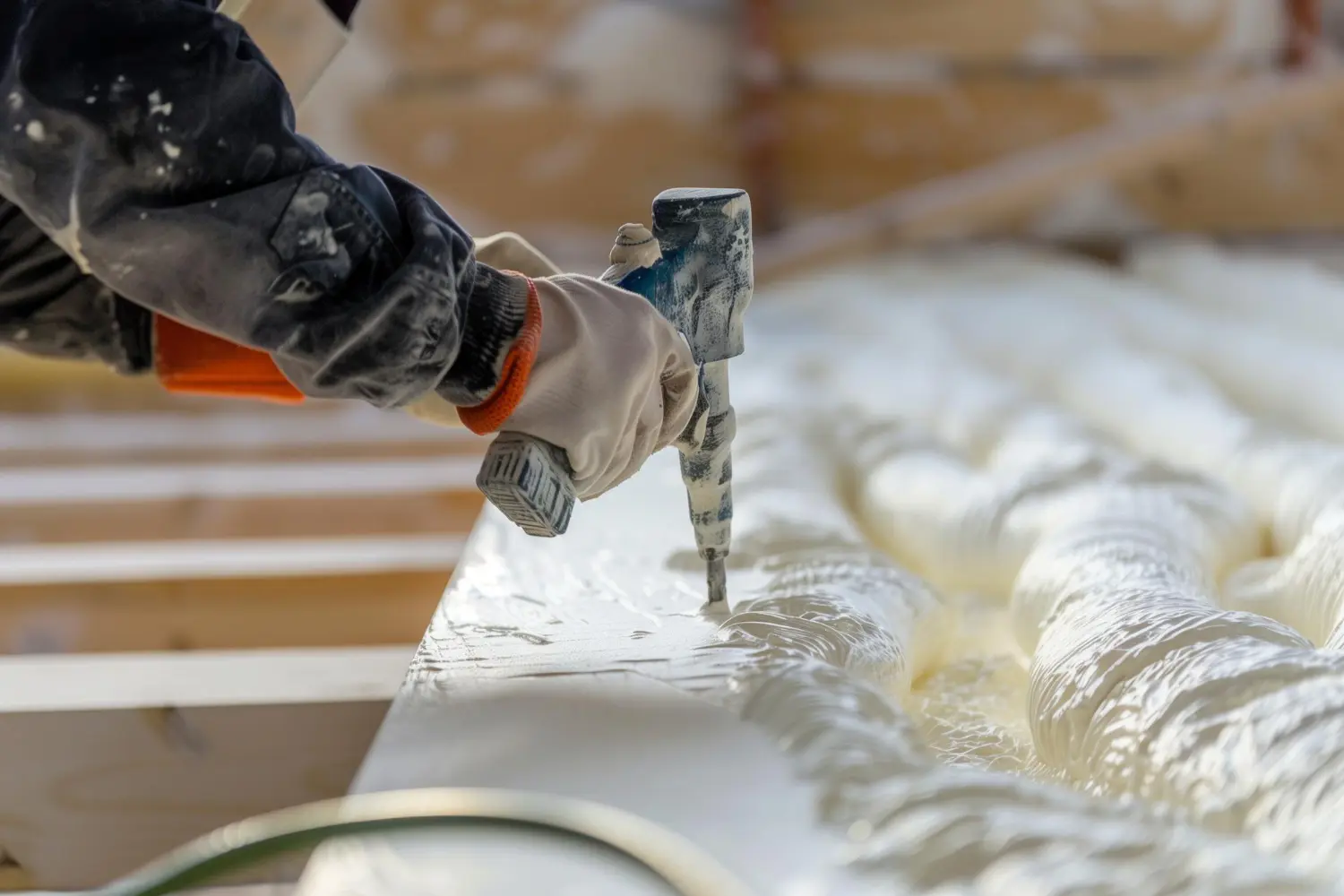
Polyurethane waterproofing is a seamless and elastic liquid membrane system applied to surfaces in contact with water such as terraces, roofs, balconies, foundations and water tanks. Applied by brush, roller or airless spray, the material cures into a single, flexible film that wraps the surface and prevents water from reaching the concrete. With over 10 years of experience, IZZOBOSS delivers durable, guaranteed polyurethane waterproofing solutions.
What Is Polyurethane Waterproofing?
A polyurethane-based liquid membrane bonds fully to the surface and becomes highly flexible once cured. It accommodates the expansion-contraction movement of concrete and bridges micro-cracks, keeping the waterproofing intact for years. With single-component (moisture-cured) and two-component versions, it offers a wide application range from interiors to exposed terraces and car-park decks.
Types of Polyurethane Membrane
The right membrane is chosen according to whether the surface is exposed to sun and the required application speed:
| Type | Key Feature | Suitable For |
|---|---|---|
| Aromatic polyurethane | Economical, high elasticity | Surfaces kept under screed/protection |
| Aliphatic polyurethane | UV-resistant, non-yellowing | Exposed terraces, roofs, facades |
| Hybrid polyurea | Very fast curing, high durability | Car-park decks, large areas, fast delivery |
Where Is It Used?
- Terraces and roofs: seamless waterproofing on walkable terraces and sloped roofs
- Balconies and wet areas: bathroom, kitchen and balcony floors
- Foundations and retaining walls: positive-side waterproofing
- Water tanks and pools: with suitable systems
- Bridge, viaduct and car-park decks: membranes that withstand traffic loads
Advantages of Polyurethane Waterproofing
- Seamless coating; leaves no weak point for leaks
- High elasticity with crack-bridging capability
- Full adhesion to concrete; prevents water tracking under the membrane
- Resistance to UV and weather (in aliphatic systems)
- Easy application to complex details (chimneys, drains, corners)
Application Process
- Surface preparation: the surface is cleaned, loose material and old waterproofing are removed, and cracks are repaired.
- Priming: full adhesion is ensured with a primer suited to the surface.
- Detail reinforcement: corners, drains and joints are reinforced with mesh/tape.
- Membrane application: the polyurethane liquid membrane is usually applied in two coats.
- Protective layer: a UV protective coat or screed protection is applied where required.
Polyurethane Waterproofing Prices (2026)
The price per square metre depends on the application area, the selected membrane type and number of coats, the condition of the surface and the density of details. An on-site survey is required for an accurate quote. Contact us for a free site survey and quote.
Polyurethane or Bitumen Membrane?
For foundation tanking and below-grade work, bitumen membrane stands out; for terraces with complex details, seamless needs and UV exposure, liquid polyurethane is more advantageous. The right choice is determined by the location and surface during the survey.
Common Mistakes
- Applying the membrane without properly priming the surface
- Applying to a damp or dusty surface
- Applying a single coat / insufficient thickness
- Not reinforcing corner and drain details
- No UV protection in exposed areas
Why IZZOBOSS?
We make your waterproofing permanent through correct material selection and meticulous field application. To protect your structure as a whole, you may also consider our concrete crack injection systems service.
Frequently Asked Questions
How much does polyurethane waterproofing cost per square metre?
The price depends on the area, membrane type, number of coats and surface condition. We recommend a free site survey for an accurate price.
How long does polyurethane waterproofing last?
A correctly applied system with UV protection where needed performs for many years; its lifespan depends on material quality and exposure conditions.
For terraces, is polyurethane or membrane better?
Liquid polyurethane stands out for terraces requiring seamless application with complex details; bitumen membrane for below-grade and foundation work.
Can it be applied over existing waterproofing?
If the existing waterproofing is sound and compatible, it can be applied over it after proper preparation; otherwise removal and renewal is recommended.
Can it be used on walkable terraces?
Yes. With a protective screed or suitable finish on top, it is safely used on walkable terraces and car-park floors.
Is polyurethane waterproofing affected by sunlight?
Aromatic systems should not be left exposed to UV; in exposed areas, aliphatic (UV-resistant) systems or a UV-protective top coat are used.
How many coats are applied?
It is usually applied in at least two coats; the number depends on the required thickness and surface conditions.
Can it be applied to a water tank?
With suitable systems it can be used in water tanks and pools; the correct product is selected before application.
Do you have a leak on your terrace or foundation? Request a free site survey and let us plan a permanent solution together.